Course Code: IT200-1D, IT200-2D
Course Title: I.T. Capstone Project
Our capstone project, titled Green Hub: A Gamified Carbon-Footprint Tracking and Renewable Energy System for Sustainable Campus Initiative, is the research we presented to the College of Computer and Information Science, Mapua Malayan Colleges Laguna. This project is aligned with United Nations’ 17 Sustainable Development Goals.
Green Hub is a sustainability project where we integrated a mobile application, a web application, and an IoT-enabled solar-based charging station to promote a sustainable use of mobile phones. We also designed a gamified experience to encourage students reduce their use of their mobile phones.
Background
In the age of information, an immediate access to information resource has become an essential part of life. Smartphones are mobile devices that enables immediate access to information.
However, smartphones have an unnoticed impact on the environment: every time we use it, we produce carbon footprint. With hundreds of millions of devices, the impact of smartphones on the environment is greatly magnified.
Objectives
Our first objective in our research is to produce a mobile application that tracks a user’s carbon footprint. This carbon footprint serves as the scoring metric which determines the amount of rewards and the ranking of the user.
Our second objective is to create a mobile application with a gamified user experience. This experience implements game elements to challenge users to lower their carbon footprint. In addition to the mobile app, we also made a web application to manage the system.
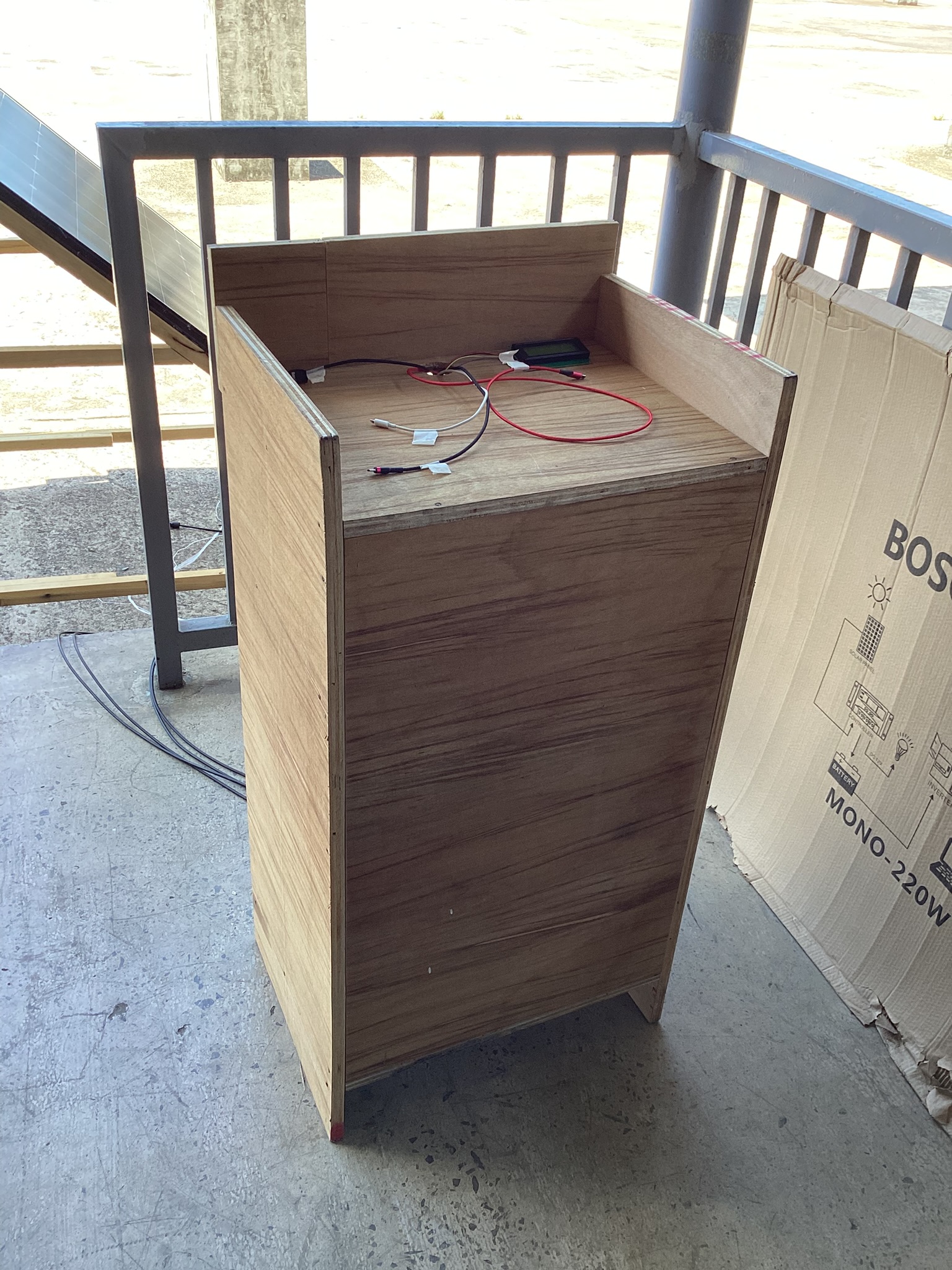
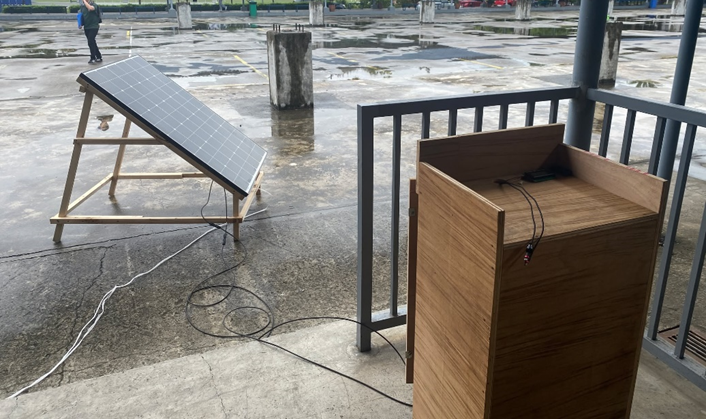
Our third and last objective is to create a charging station. This charging station uses solar energy to charge devices. As part of the rewarding mechanism of the gamified experience, users can use the charging station.
System Architecture
Our system comprises of a mobile application, a web application, and a charging station.
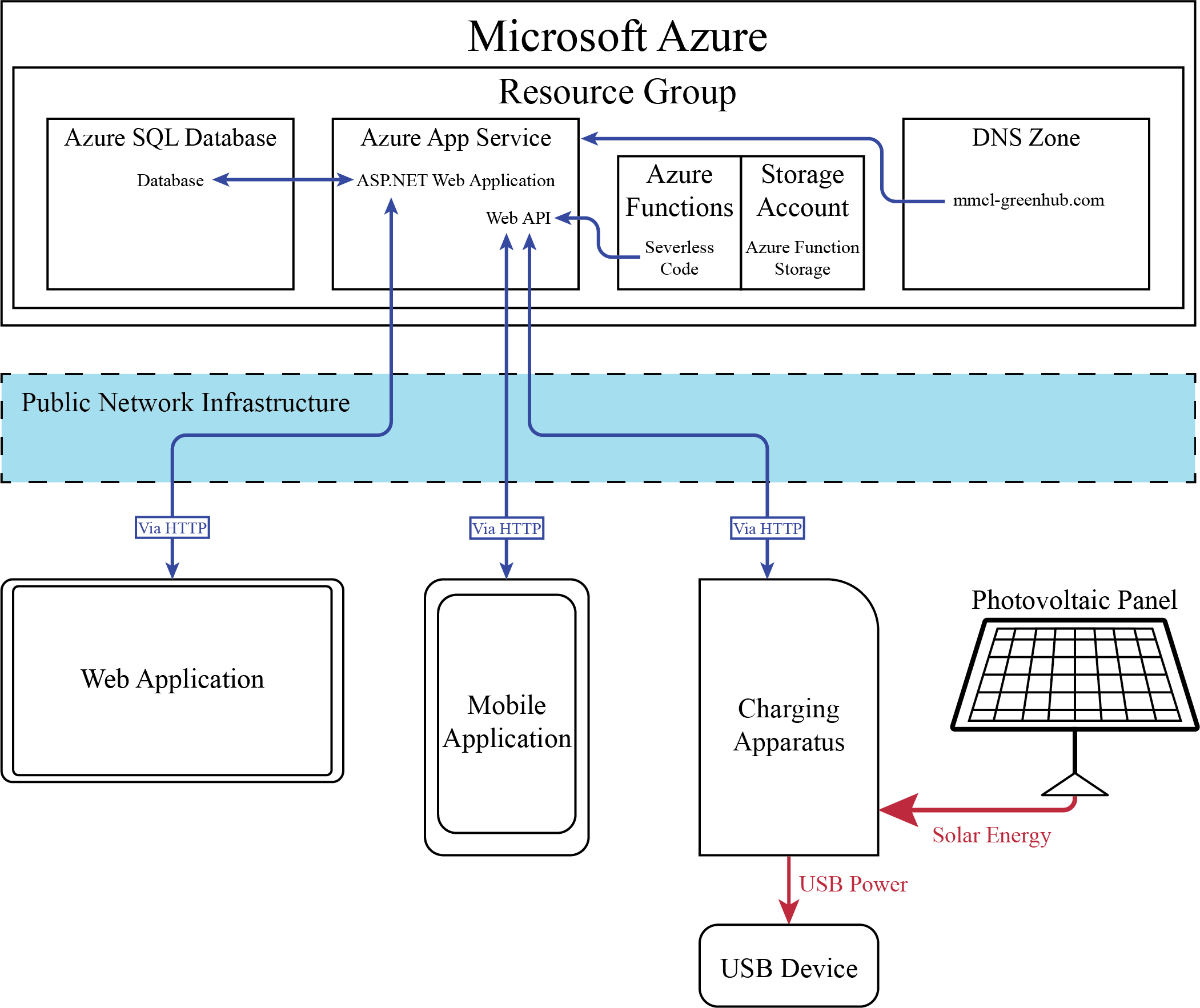
The heart of our system is in the cloud. Using Azure App Service, Azure SQL Database, and Azure Functions, we developed a cross-platform system to create a gamified system that encourages users to reduce the usage of mobile phones and reward them for doing so.
Charging Station
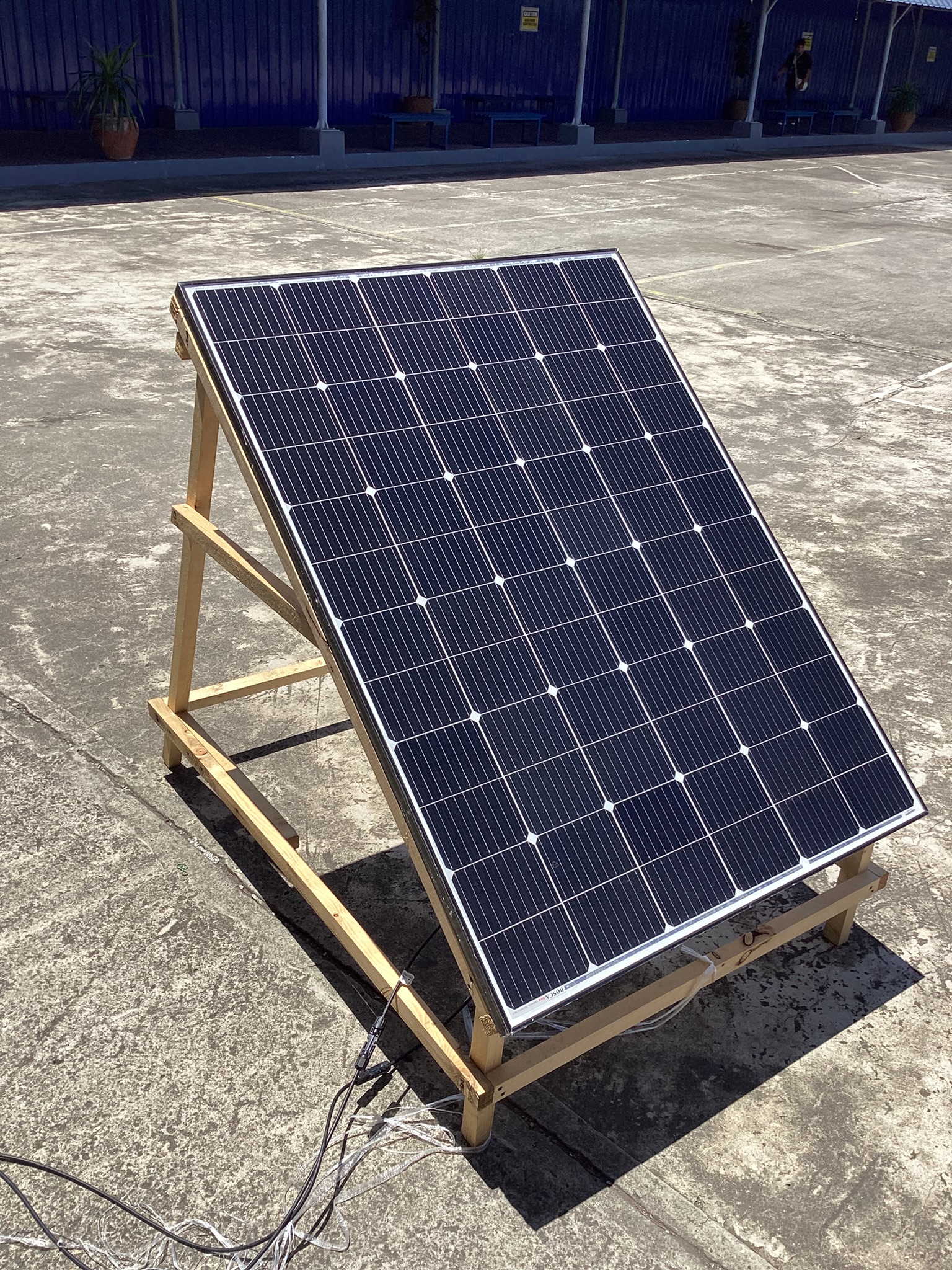
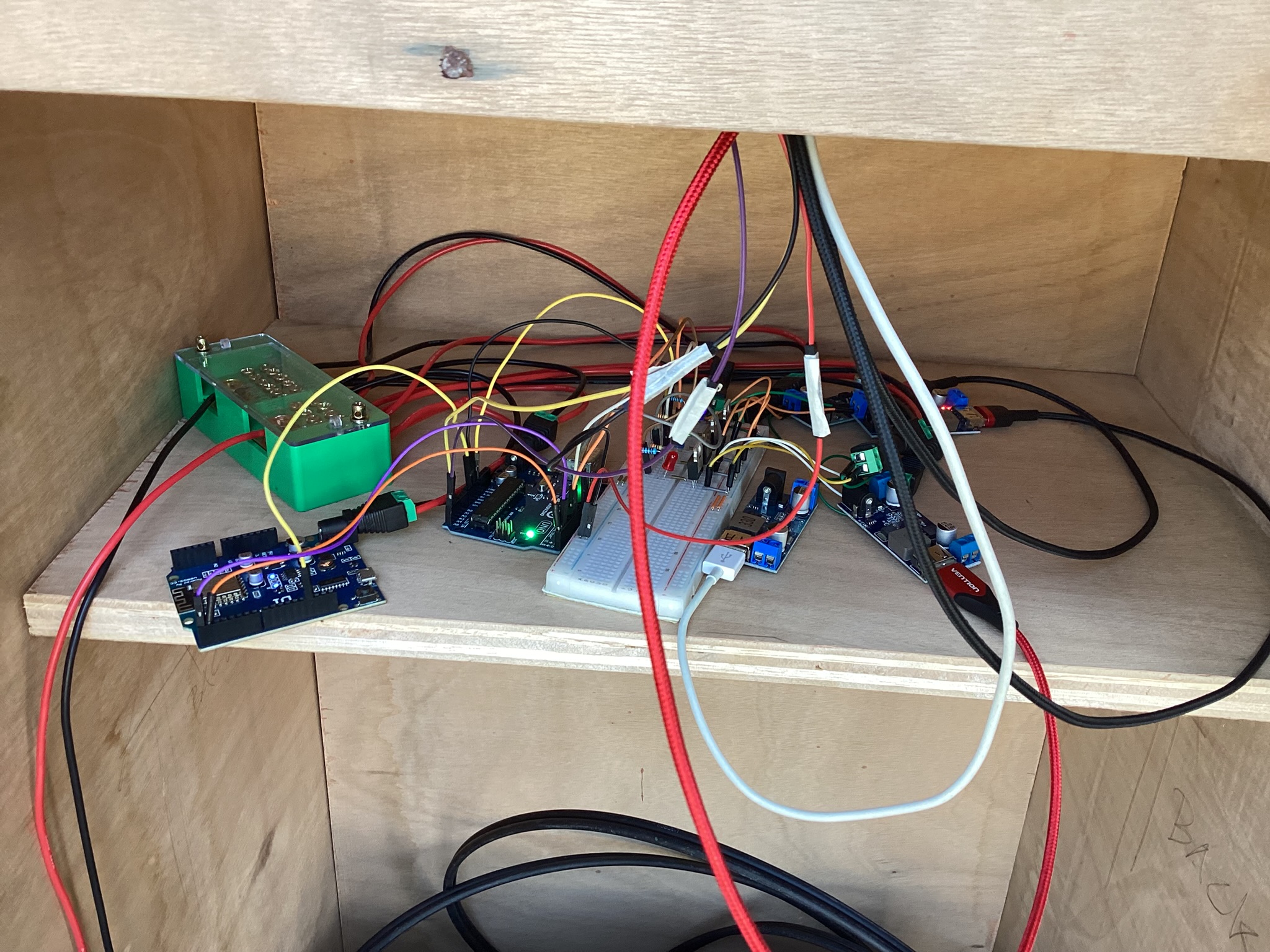
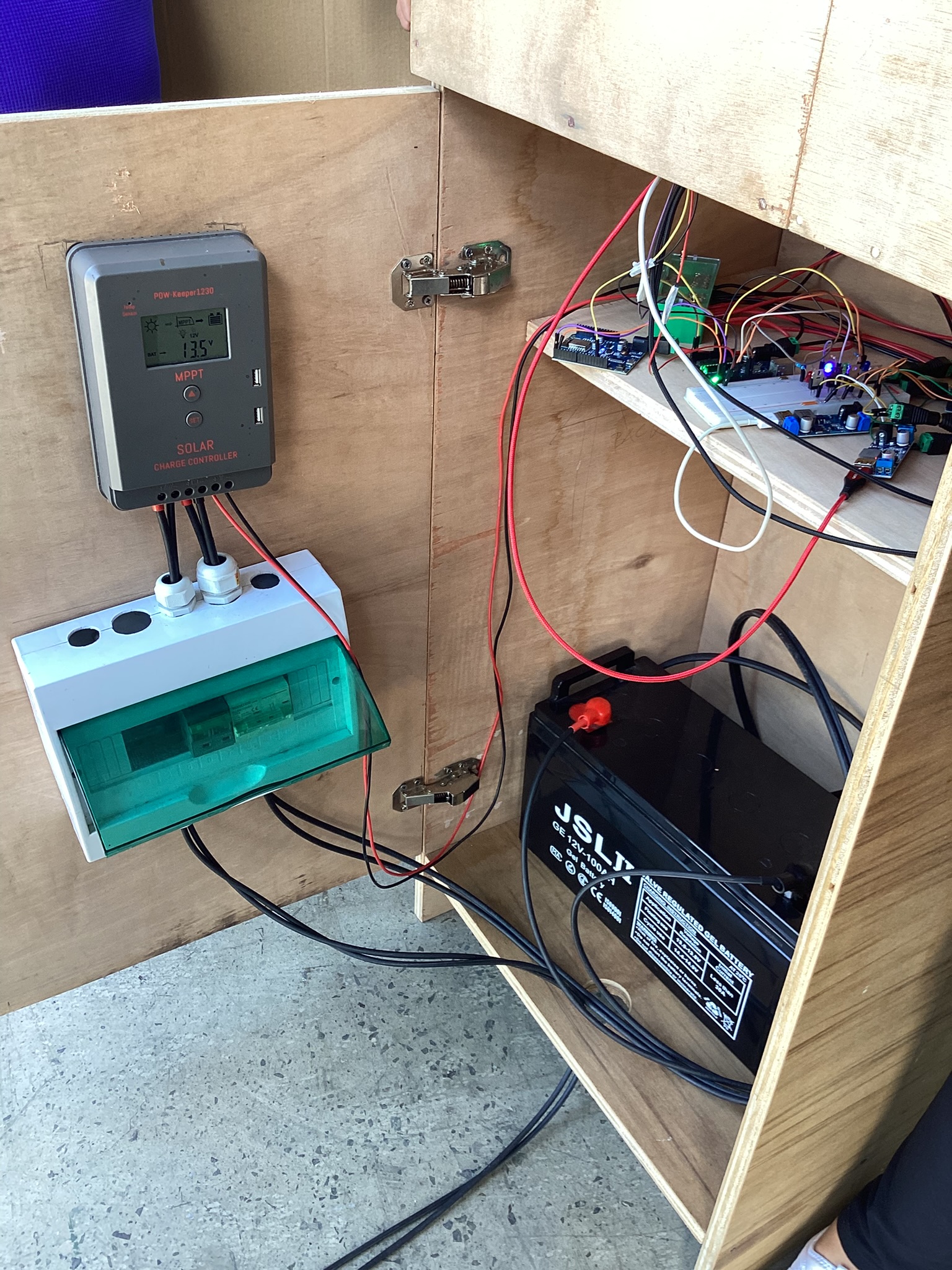
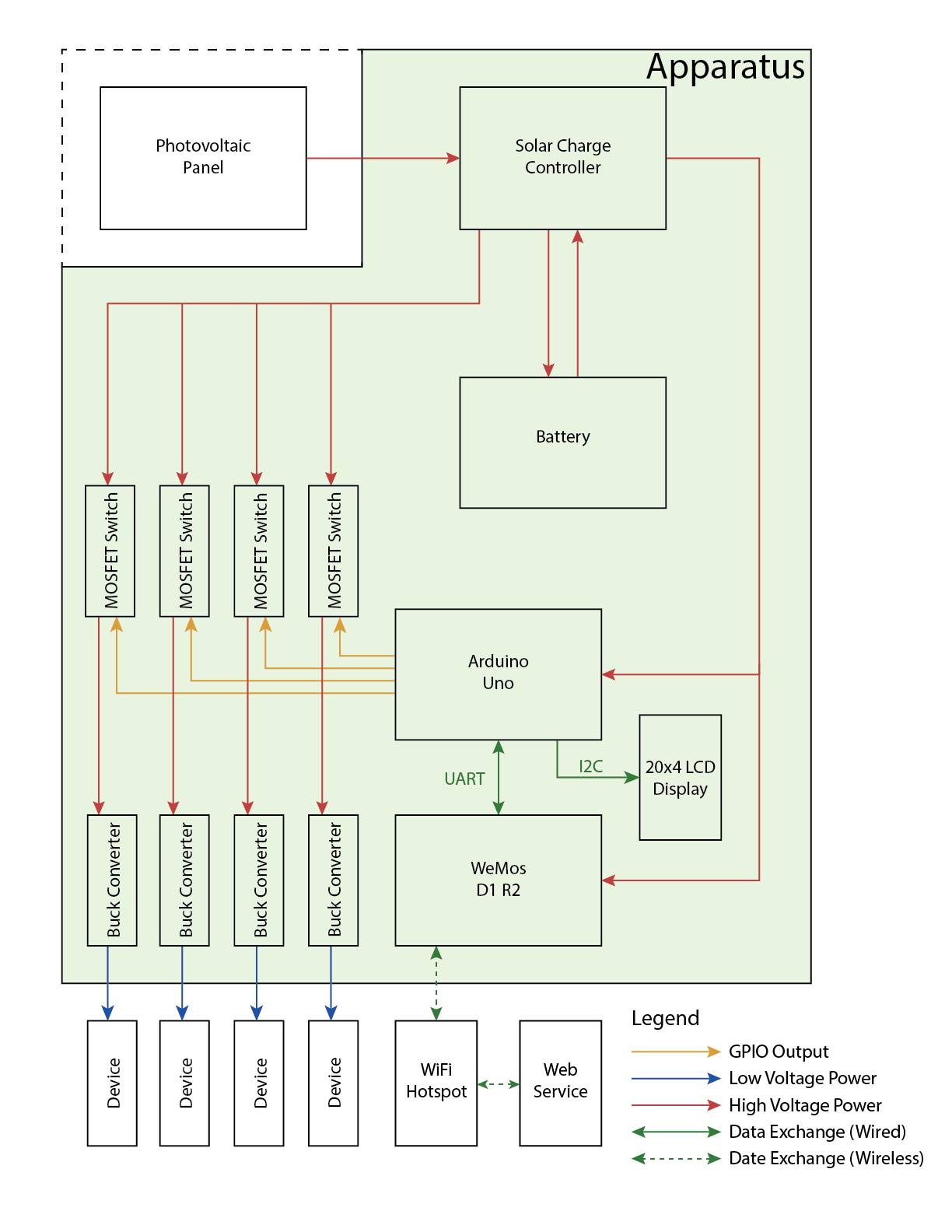
The charging station uses Arduino Uno and WeMos D1 R2 microcontrollers. For the photovoltaic systems, it uses a photovoltaic panel, a solar charge controller, and a battery. For voltage regulations, buck converters are used and MOSFETs serve as the switches to switch the buck converters on or off.
Results
The system was fully deployed and the users were able to participate in the testing of the mobile application and the charging station.
Mobile Application
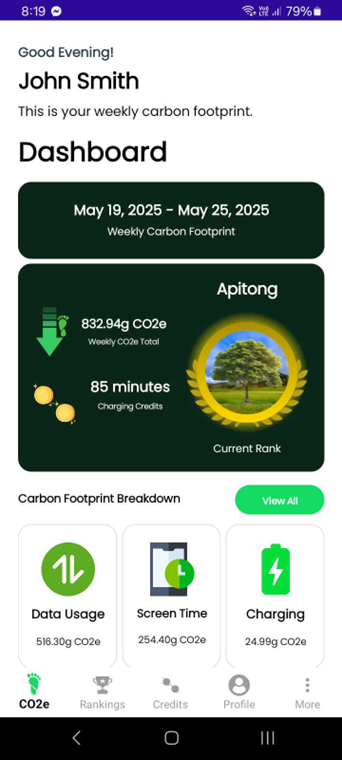
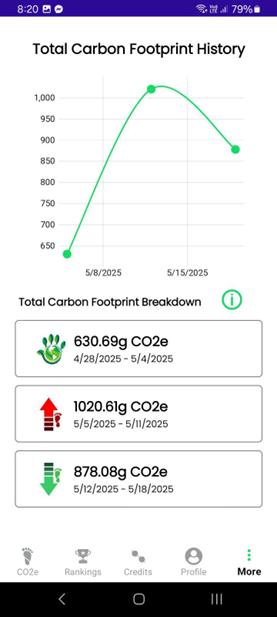
The mobile application is the interface a user can log in to. It obtains how much the user uses his phone and reports it to the web server. From the mobile app, the user can see his carbon footprint, charging credits, announcements from the administrator, and ranking. The mobile app is made using .NET MAUI in C# language.
The mobile application was uploaded to Google Play Store. The mobile application collected usage statistics such as duration of active screen usage, duration of calls, duration of charging, number of SMS text messages, and amount of cellular data usage. These values are used to determine a user’s carbon footprint measured in grams.
Web Application
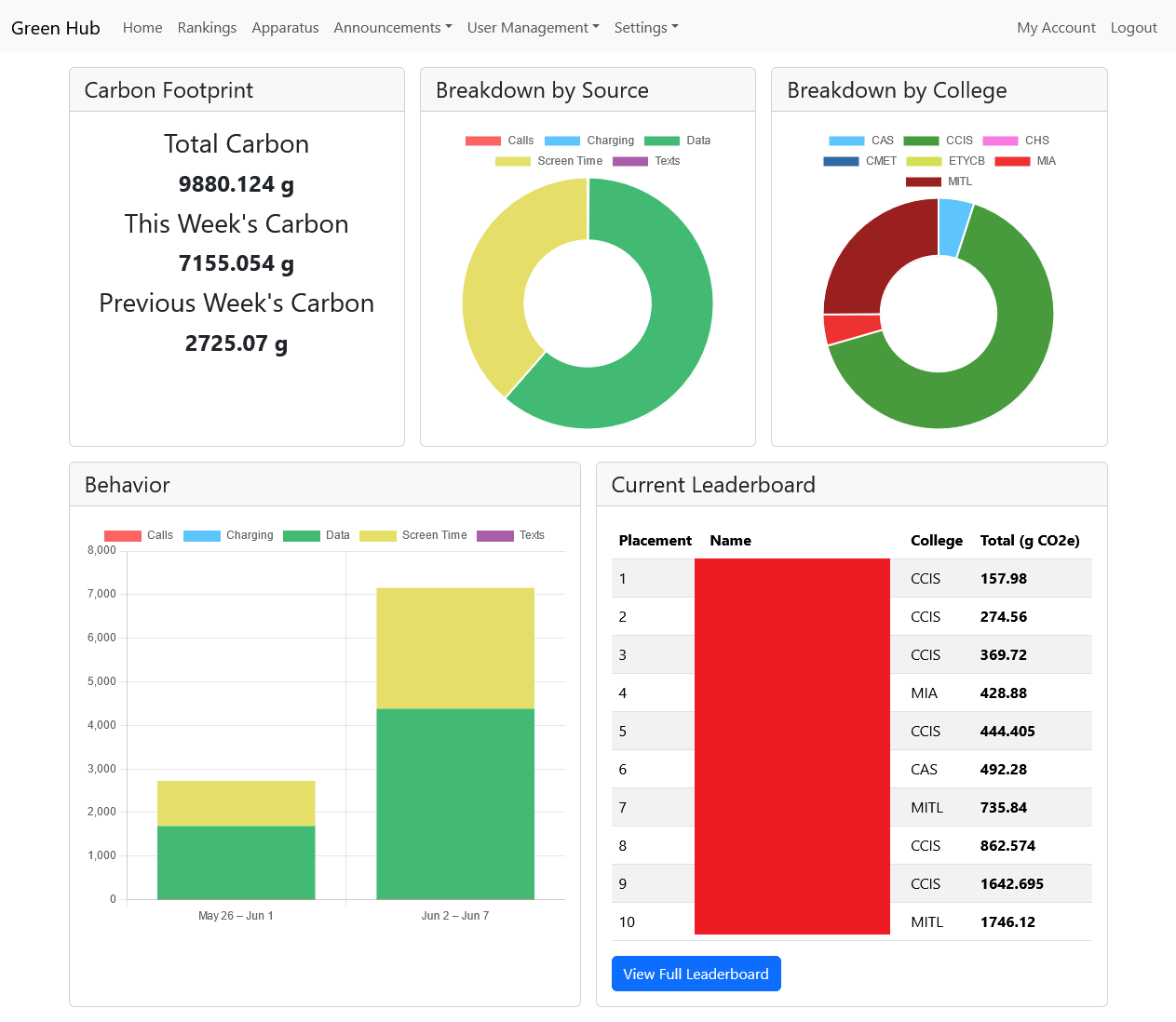
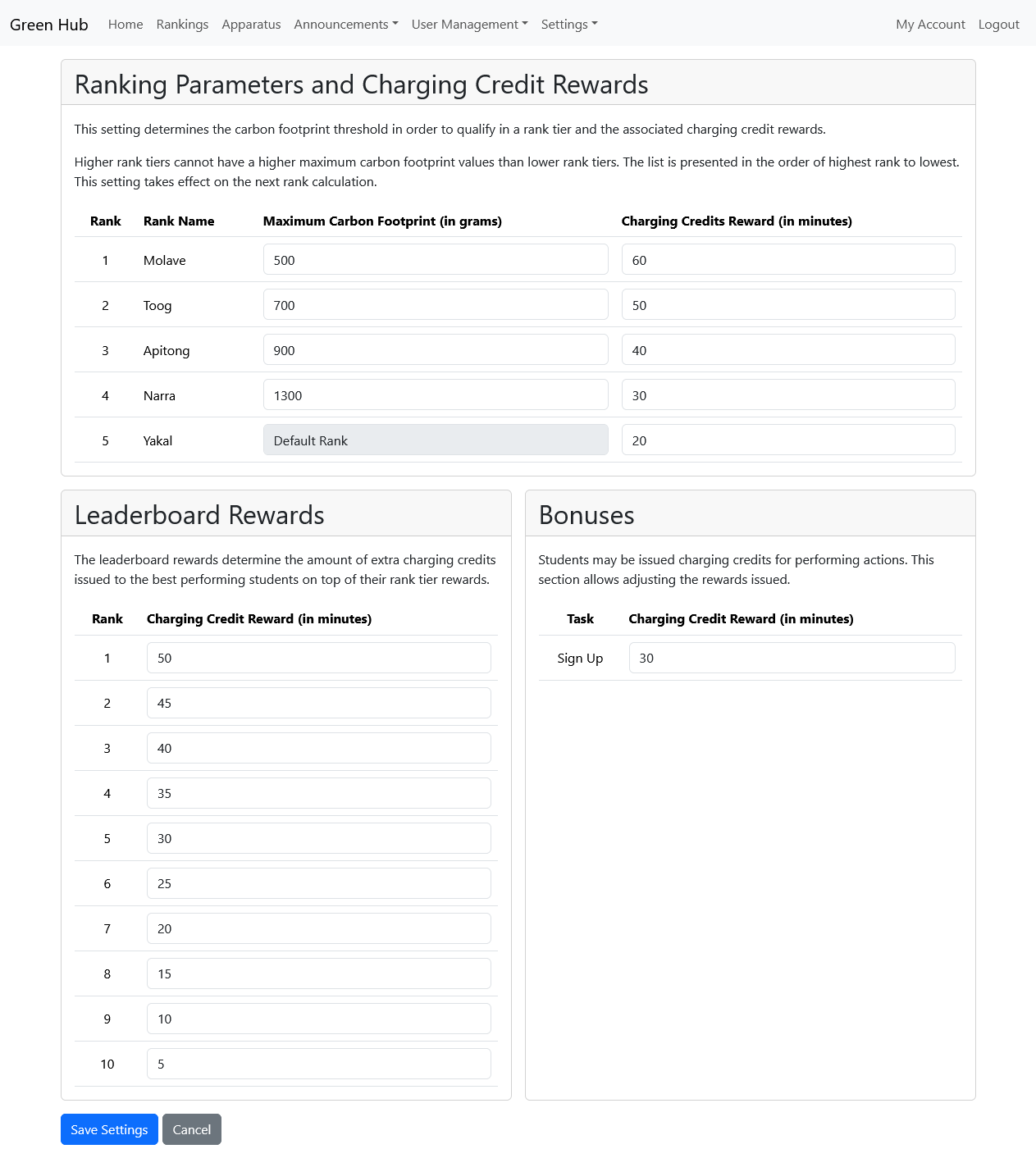
The web application allows an administrator to check the campus carbon footprint and manage the gamified system. Management tasks include changing the ranking parameters and charging credit rewards. Charging credits are the rewards issued to users and are used to active a port on the charging station. Other management tasks include updating Terms of Use and Privacy Policy documents, calculation parameters, and system settings and managing apparatuses.
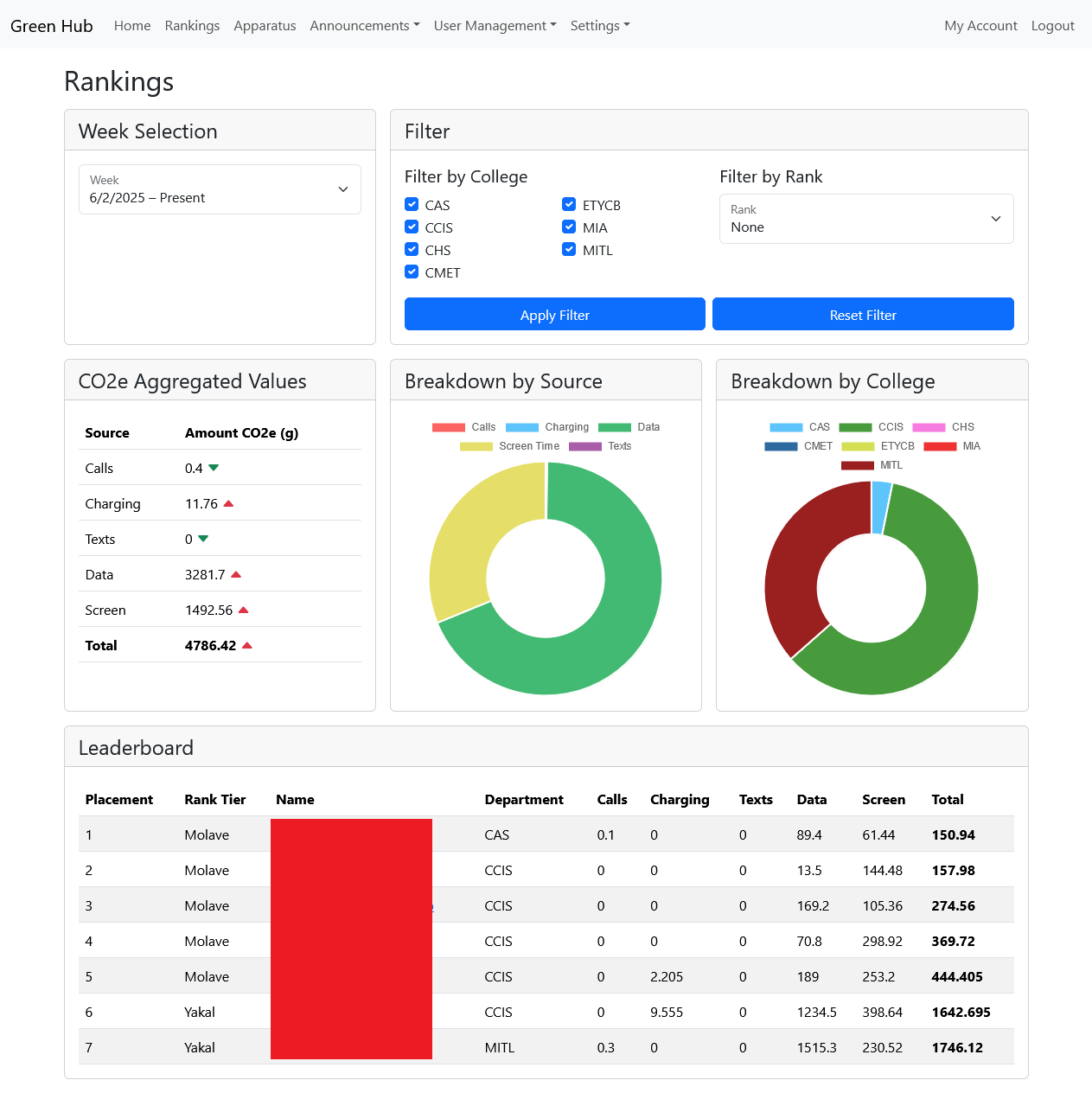
The web app collects every user’s mobile phone usage activity. It then aggregates the collected values and creates visuals of the carbon footprint. The five sources of carbon footprints are duration of calls, active screen time, and charging, number of SMS text messages, and the amount of cellular data usage.
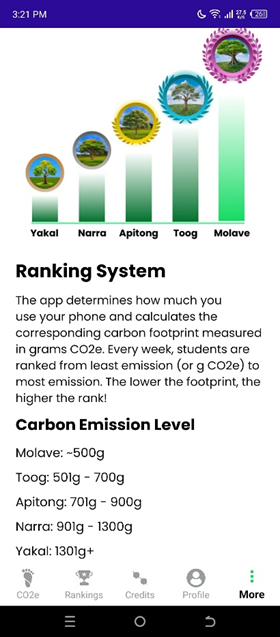
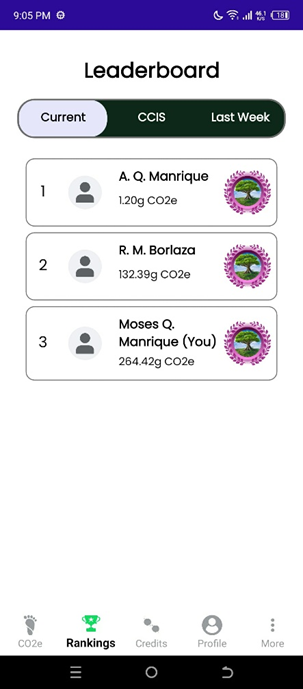
Users are ranked by their carbon footprint from lowest to highest. They are grouped in tiers based on their accumulated carbon footprint per week. The leaderboard is finalized every Mondays, and charging credit rewards are issued at the same time.
Charging Station
The charging station interfaces with the web application. Charging ports are turned off but can be turned on by the user when he requests charging from the mobile app.